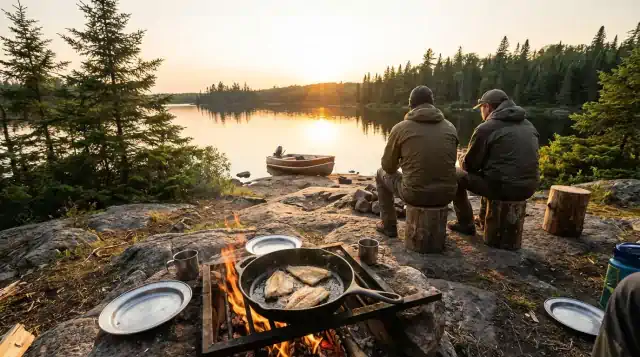
Shore Lunch: The Best Meal You Will Ever Eat

You’ve been on the water since the sun cleared the pines. Your thumb is raw from lip-landing fish, your shoulders have that good kind of ache, and your stomach is starting to rumble. You could head back to the cabin for a cold sandwich, but why would you?
If you’re on a Canadian fly-in fishing trip, there is only one correct answer for the midday meal. It’s time for a shore lunch. This isn’t just a quick bite to eat; it is a time-honored northern tradition and, without a doubt, the best meal you will ever eat. It is the perfect pause in a day of hardcore fishing, a chance to stretch your legs, and a culinary experience you can’t buy in any city.
Whether your guide is handling the fillet knife or you are running the show on an outpost trip, pulling off the perfect shore lunch is an art form. Here is how to make it happen.
1. Secure the Main Course
A true shore lunch revolves around one ingredient: fresh walleye. But you don’t want to keep the giants.
- Target the Eaters: You are looking for walleye in the 14 to 18-inch range. They are the perfect size for the pan, yield sweet and flaky meat, and leave the big breeding females in the lake to sustain the fishery.
- Keep them Alive: Keep your catch on a stringer or in the livewell until the very last minute. The secret to the meal is absolute freshness.
- Plan for Portions: A good rule of thumb is one eater-sized walleyes per person. You may need more if the fish are smaller or you have fewer side dishes.
Once you have a few perfect eaters in the well, it’s time to reel up and find a spot.
2. Pick Your Dining Room
Your outpost lake has countless miles of shoreline, but not all of it makes for a good kitchen. Look for an exposed point or a small rocky island with deep water access so you can safely beach or tie off the boat.
- Find the Breeze: A wind-swept point keeps the mosquitoes and blackflies away while you cook and eat.
- Flat Rocks: You want a natural table. A large, flat slab of Canadian Shield granite is the perfect place to set up your prep station and your camp stove or fire.
- Fire Safety: If you are building a fire, make sure it is on bare rock, away from dry moss and roots. Building a small ring of stones helps contain the coals.
3. The Assembly Line
If you are at an outpost, this is where teamwork comes in. While one guy gets the fire or the camp stove ready, the other handles the knife work.
1 Fillet and Debone: Quickly fillet the walleye, remove the ribs, and “zip” out the pin bones. You want completely boneless chunks of meat.
2 The Wash: Rinse the fillets in the cold lake water to remove any slime or blood.
3 The Breading: Drop the wet fillets directly into a gallon Ziploc bag filled with your breading of choice. Shore Lunch brand is a classic, but half flour, half cornmeal, and a heavy dose of seasoned salt works wonders. Shake the bag until every piece is generously coated.
Don’t overcomplicate it. The natural flavor of a cold-water walleye is incredible on its own, the breading is just there for the crunch.
4. Pack the Perfect Kit
If you are flying in to a remote cabin, you are the chef. You need to pack a dedicated “shore lunch box” in the boat every morning. Here is what you need:
- A well-seasoned cast iron skillet
- Cooking oil or lard (lard travels well and handles high heat)
- Fillet knife, cutting board, and a honing steel
- Tongs or a fish spatula
- Paper plates, paper towels, and forks
- Breading, salt, and pepper
- A can of baked beans and a couple of raw potatoes
Keep everything in a small waterproof tote so you can grab it and go when the stomach rumbles start.
5. The Fry (Cast Iron Magic)
A shore lunch without cast iron is just a picnic. Put your skillet over the heat and add your cooking oil. How do you know when it’s ready?
Drop a pinch of breading into the oil. If it immediately pops and sizzles, you are in business. If you put the fish in before the oil is screaming hot, you’ll end up with greasy, soggy fillets. Nobody wants that.
Carefully lay the fillets into the oil. Let them fry until the edges turn golden brown, then give them a flip. It only takes a couple of minutes per side. When they float slightly and sport a crispy, golden-brown crust, pull them out and let them drain on a paper towel.
The Sides: Don’t forget the supporting cast. Open a can of baked beans and set it right next to the fire to simmer. While the fish is resting, toss thickly sliced potatoes into the leftover fish oil. Fry them until they are crispy on the outside and fluffy on the inside. It is a hearty, heavy side dish that will give you all the energy you need to cast heavy pike spoons for the rest of the afternoon.
6. Lodge vs. Outpost: Who Does the Cooking?
How your shore lunch comes together depends entirely on the type of trip you booked.
At a Full-Service Lodge:
- Your guide handles everything. They navigate to a pre-established lunch spot, build the fire, clean the fish, and cook the meal while you relax on the shoreline with a cold drink. It is pure luxury in the middle of the wilderness.
At an Outpost Camp:
- You are the guide and the cook. You find the island, gather the wood, and fry the fish. It takes more effort, but there is a deep, primal satisfaction in catching, cleaning, and cooking your own meal on a wilderness lake.
7. Enjoy the Payoff
There are no white tablecloths here. You grab a paper plate, load it up with crispy walleye, hot beans, and fried potatoes, and find a comfortable rock to sit on.
Take a bite. The crunch of the breading gives way to perfectly flaky, steaming hot walleye that was swimming in the lake thirty minutes ago. Pair it with the sound of the wind in the pines and the view of a pristine, boat-free horizon.
You’ll quickly realize that five-star restaurants in the city can’t compete with this. It’s the combination of the freshest fish on earth, the woodsmoke, the fresh air, and the satisfaction of earning your meal.
Final Word:
A shore lunch is more than just calories to keep you casting until dark. It is the defining moment of a Canadian fly-in trip. It’s the smell of woodsmoke mingling with the scent of the lake, the sizzle of the cast iron, and the camaraderie of sharing a wild meal with good friends on an island that belongs entirely to you for the afternoon. If you’ve spent years talking about “someday” experiencing this for yourself, eating fresh walleye on a sun-warmed rock miles away from cell service and civilization… that’s what you’ll remember. So stop dreaming, and start planning.
Search Blog