How to Catch 100 Walleye in a Day
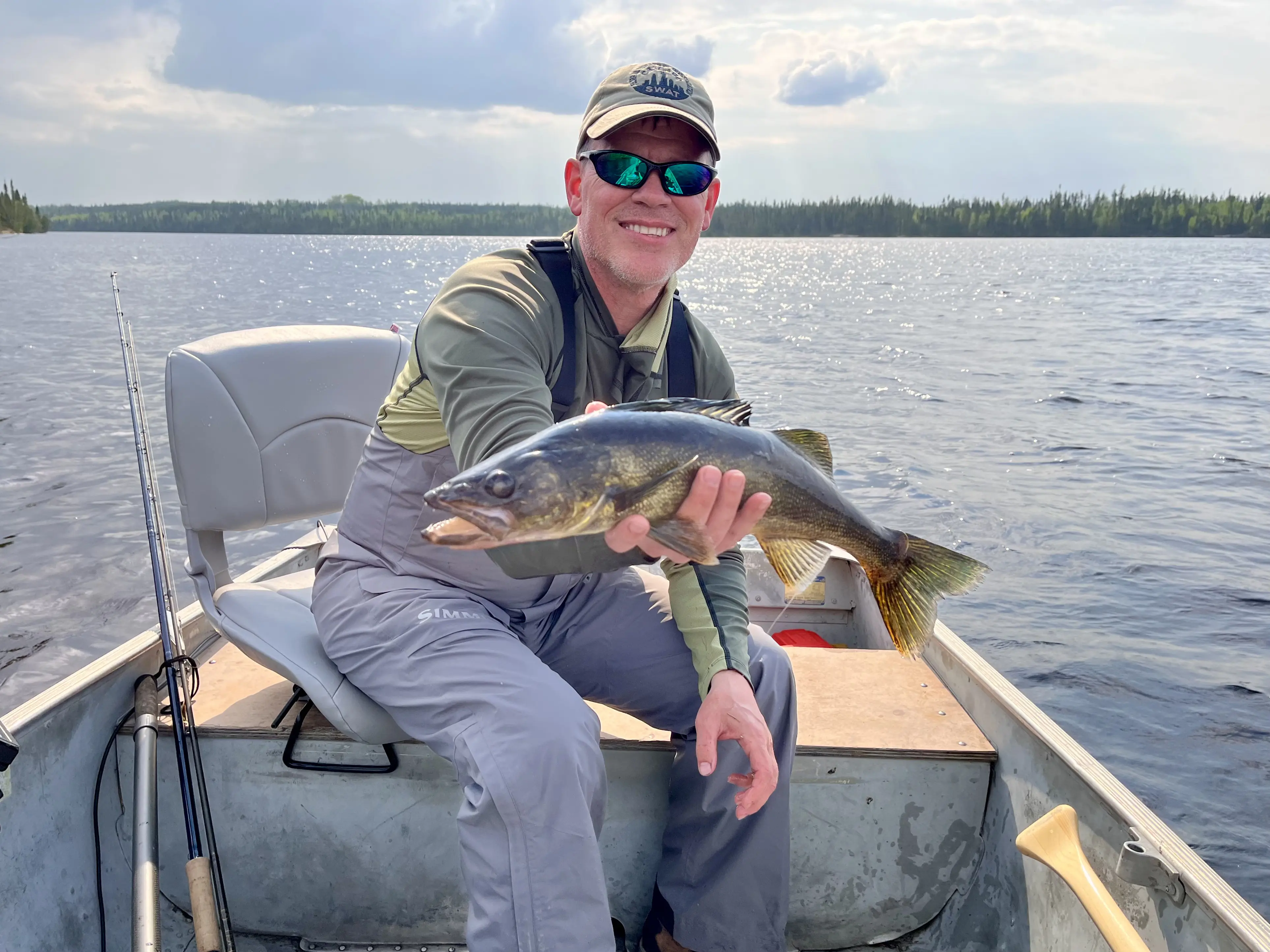
You’ve heard the stories. A buddy of a buddy comes back from a Canadian fly-in fishing trip and claims they caught 100 walleye in a single day. You probably rolled your eyes, smiled politely, and chalked it up to classic fisherman’s math. It sounds like a tall tale reserved for glossy magazine covers and late-night fishing shows. But what if I told you it isn’t a myth?
On a remote, fly-in lake, a 100-fish day is not only possible, it’s a realistic goal if you hit the right conditions and use the right approach. When you are the only boat on thousands of acres of untouched water, the rules of pressured home waters simply don’t apply. These fish haven’t seen a parade of boats dragging bottom bouncers and crankbaits all season long. They are aggressive, hungry, and waiting to be found.
But catching that many fish doesn’t happen by accident. It requires efficiency, a solid strategy, and a little bit of stamina. Here is how you can pull off the ultimate walleye numbers day, and why it might just change the way you fish forever.
1. Follow the Wind and Water
Walleye are notoriously lazy, but they are also incredibly efficient predators. If you want to catch numbers quickly, you need to find where the lake is doing the work for them.
The Dinner Bell
- Find the Current: Look for any place water enters or exits the lake. Neck-downs, rivers, and feeder creeks are natural funnels for baitfish. Where there is moving water, there is a hungry school of walleye waiting in the eddies.
- Chase the Wind: A calm, sunny day might feel great on your face, but it’s terrible for walleye fishing. You want the “walleye chop.” Head to points and shorelines where the wind is driving waves into the rocks. The turbulence concentrates & disorients baitfish and blocks sunlight, triggering aggressive feeding binges.
2. Keep Your Tackle Simple
If you want to catch 100 fish, you can’t waste time digging through a massive tackle box or untangling complex rigs. Speed is the name of the game, and simplicity is your best friend on a remote outpost trip.
- The Trusty Jig: A 1/4 or 3/8 oz lead head jig is all you really need. Bring a handful of colors, but don’t overthink it – chartreuse, pink, and white will get the job done 95% of the time.
- Plastics Over Live Bait: Threading a fresh minnow or crawler onto your hook after every catch eats up valuable minutes. Switch to durable soft plastics like paddletails or twister tails. You can often catch a dozen fish on a single piece of plastic before needing to replace it. Gulp minnows provide a middle-ground with a strong scent to coax finicky fish while providing better durability and less hassle than live bait.
3. Don't Leave Biting Fish
This sounds obvious, but it’s the number one reason anglers fall short of the century mark. They catch five fish, assume the spot is tapped out, and move on to the next point.
Walleye are schooling fish. If you pull one over the gunwale, there are likely dozens, if not hundreds, more sitting right beneath you. When you get a strike, drop an anchor or hit the spot-lock on your trolling motor. Work that exact depth and contour until the bites completely stop.
If the action slows, don't immediately fire up the motor. Try casting at different angles or dragging your jig just outside the perimeter of where you were catching them. You may find that the school has shifted a bit. Also, the larger, smarter walleyes will hang out on the fringes of the main school, waiting for crippled baitfish to drift away from the chaos. Only when the action goes completely cold should you pull up and start searching again.
4. Master the Drop
When you are sitting on a massive school of remote Canadian walleye, the bite almost always happens on the fall. If you are blindly casting and reeling straight back to the boat, you are missing out on dozens of fish.
Cast your jig, leave the bail open, and watch your line intently. If it twitches, stops sinking prematurely, or darts to the side – set the hook. Once you pop the jig off the bottom, let it flutter back down on a semi-slack line. That momentary pause is when the magic happens. Most of the time, the strike won't be a vicious jerk. It will feel like a rubber band stretching, or a sudden, unexplained heaviness on the end of your line. When in doubt, set the hook hard. If you dial in the cadence, you’ll often find yourself hooking up on nearly every cast.
5. Maximize Your Efficiency
Catching 100 walleye in an 8-hour fishing day means you need to land roughly one fish every four to five minutes. Every second your line is out of the water is a missed opportunity to pad your numbers.
- Pinch your barbs: Crushing the barbs on your jigs makes unhooking fish instantaneous. Half the time, you can release them right at the side of the boat with a quick twist of the wrist, never even touching them.
- Keep pliers handy: Have your needle-nose pliers on your hip or on the console, not buried under a rain jacket in a storage compartment.
- Skip the net: Lift smaller fish into the boat and avoid tangles and get your jig back in the water quickly. The numbers climb astonishingly fast.
6. Why You Might Want To...and Why You Might Stop)
Hitting the 100-fish mark is a badge of honor. It’s a story you’ll tell for the rest of your life. It’s the ultimate validation that you’ve mastered the pattern, read the water perfectly, and completely dialed in the lake.
But here’s the funny thing about a 100-walleye day: it hurts.
Your hands may be a bit raw and sliced from spiny dorsal fins and sharp gill plates. Your arms may be tired from endless hooksets. You’ll smell like fish slime, sunscreen, sweat, and bug spray. By fish number 60, the novelty starts to wear off. By fish number 80, it becomes a grind.
Once you achieve this milestone you may realize something profound the next morning – you’ve scratched that itch. Sheer volume of fish is no longer the singular goal. Instead of spending the next day chasing another 100 eater walleyes, you may prefer to tie on a six-inch swimbait and start hunting for that elusive, 30-inch trophy. Or you might sleep in, pack a shore lunch kit, explore a completely new section of the lake, fish for another species, or just enjoy the profound beauty and solitude of the boreal forest.
Final Word:
Whether you’re trying to set a personal numbers record on a windswept point, hunting for a personal best, or just looking to fry up a few golden fillets over an open fire, a Canadian fly-in fishing trip gives you the canvas to paint your perfect day. The chaotic thrill of a double-header, the exhausted satisfaction as you idle back to the cabin at sunset, and the laughter of friends around the campfire… that’s what you’ll remember. So stop dreaming, and start planning.
- Develop a Rhythm: Cast, jig, hookset, release, repeat. When you and your boat partner get into a rhythm, the numbers climb astonishingly fast.
Search Blog
- What Fishing Pressure Looks Like on Road Access Lakes vs Fly-In Lakes August 01, 2026
- Picaridin vs DEET July 25, 2026
- Wildfire impact - maps and resources July 17, 2026
- Trophy Pike: How to Find and Land a Northern Over 40 Inches June 06, 2026
- The Best Bug-Protection Plan for Wilderness Fishing April 18, 2026
- Brook Trout in the Backcountry: Chasing Specks on Fly-In Waters January 03, 2026
- What Your Outfitter Wishes You Knew Before You Arrived December 13, 2025
- Shore Lunch: The Best Meal You Will Ever Eat November 29, 2025
- How to Catch 100 Walleye in a Day November 22, 2025
- How to Book a Return Trip Before You Leave Camp November 14, 2025
- Planning a Budget-friendly Fly-in Trip Without Cutting Corners November 08, 2025
- Floatplane 101: What It's Like to Fly Into the Bush for the First Time October 25, 2025
- How to Quickly Locate Fish on a Remote Lake October 11, 2025
- Lodge vs Outpost Trips - the big picture September 27, 2025
- 8 Steps to Plan a Canadian Fly-In Fishing Trip September 06, 2025