How to Quickly Locate Fish on a Remote Lake
The sound of the floatplane fades into the distance. Then, silence. You are standing on a dock in the middle of nowhere, surrounded by pristine water and the promise of outstanding fishing.
But then the reality sets in. You have 5,000 acres of water, 7 days, and no guide. How do you quickly find fish and set yourself up for an epic week?
Remote fly-in lakes are stuffed with fish, but they don’t jump in the boat. To make the most of your wilderness adventure, you need a strategy to break down new water fast. Here is your guide to locating Walleye and Northern Pike quickly on a fly-in trip.
1. Do Your Homework Before the Trip
The fastest way to find fish is to start looking before you even leave your house.
-
Study the Lake Map: Most outfitters provide lake maps. Don't just pack it; study it and mark potential hotspots.
-
View from Space: Check out satellite imagery on Google, Bing, or Apple maps. Seeing a weed bed on a satellite image can save you hours of cruising, and seeing shallow rocks can save you from a costly mistake.
-
Identify Feeder Creeks: Mark every spot where moving water enters or exits the lake.
-
Look for "The Pinch": Identify areas where the lake narrows significantly. These neck-downs create natural current, which funnels baitfish and predators.
2. Start Shallow for Pike
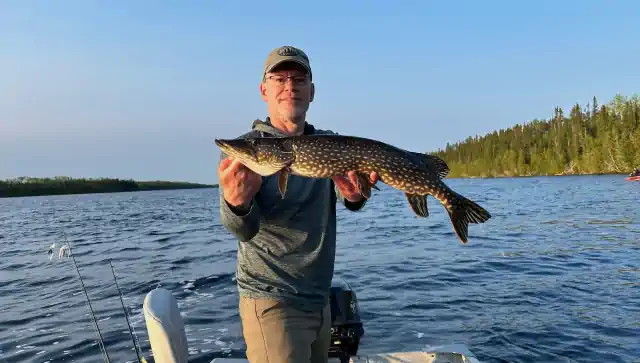
When you first launch the boat, you want to bend a rod quickly to build confidence. Northern Pike are your best friends here. They are aggressive, territorial, and it’s generally easy to locate some smaller ones right away.
Where to Look for Pike
-
Back Bays: Head to the shallow, sun-warmed bays, specifically those with dark bottoms or emerging cabbage weeds.
-
Wind-Blown Shorelines: If the wind is smashing into a shoreline, it pushes warmer surface water and baitfish there. Pike will be waiting.
-
Beaver Lodges: Almost every remote lake has them. They are structural magnets for perch, which means big pike are lurking nearby.
The Search Lure: Tie on a flashy Daredevle or Johnson’s Silver Minnow spoon, a large spinnerbait or a Mepps Spinner. Cover water fast – if you aren't getting bites, keep moving.
3. How to Locate Walleye
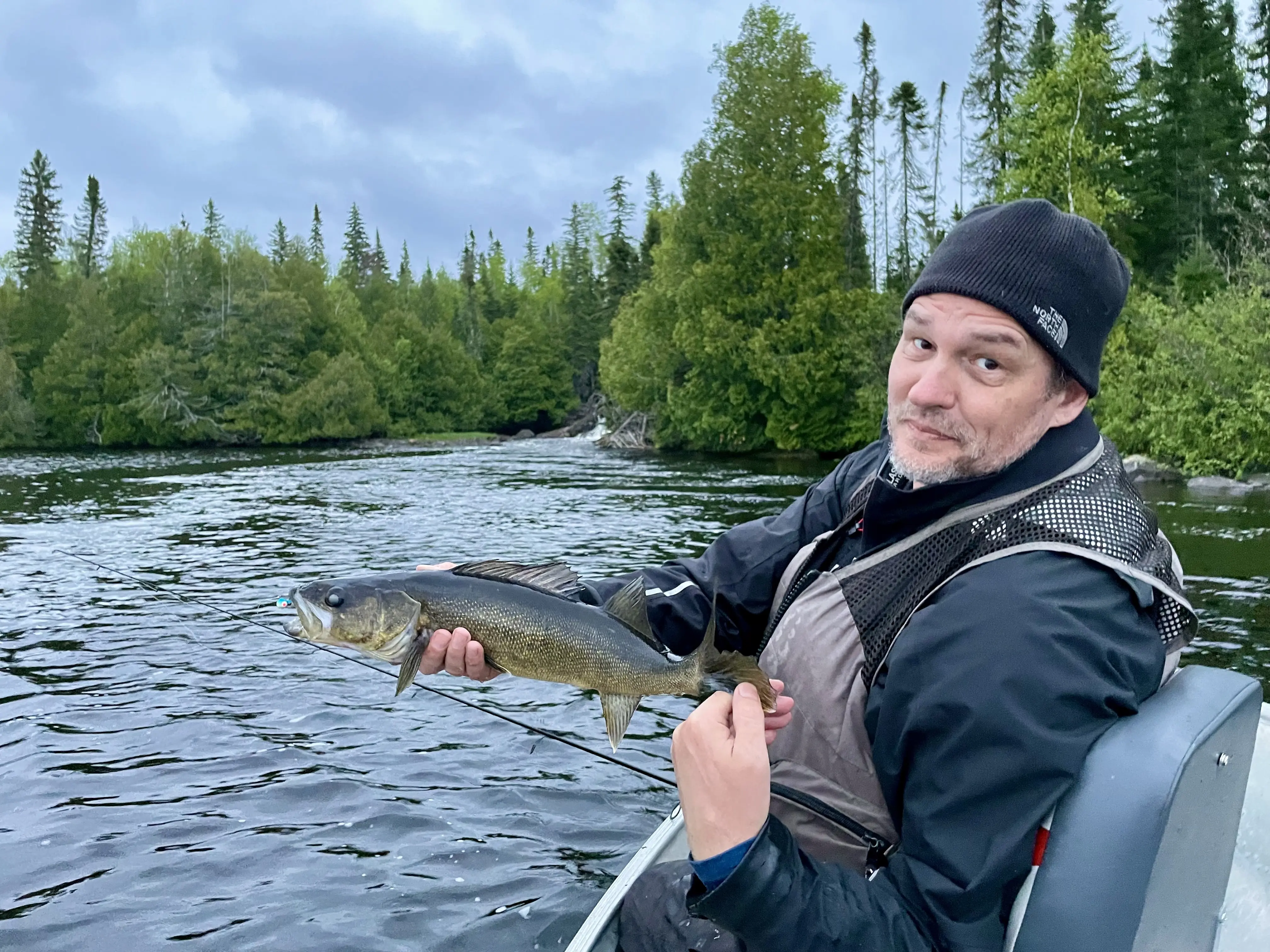
Walleye are the gold standard for shore lunch on fly-in fishing trips, but they can be moody. They relate heavily to current, structure and light conditions.
Top 3 Spots to Check First
-
Current Areas: Walleye are lazy but smart. They sit in eddies near moving water (inflows/outflows) waiting for food to wash by.
-
Points and Extensions: Look for land points that extend underwater into the main lake basin. Walleye will stack up on the drop-offs surrounding these points.
-
Mid-Lake Reefs (Humps): If you have sonar, look for underwater islands that top out at 10–15 feet and drop back into deep water.
The "90:10 Rule"
90% of the fish are in 10% of the water. This often means current, structure, cover…and wind.
-
Face the Wind: Fish the side of the structure the wind is hitting. The "walleye chop" breaks up sunlight penetration and disorients baitfish.
Nothing fancy is needed to catch walleye. A simple 3/8 oz jig with a bright twister or paddle tail (white, yellow, or chartreuse.) Drift these along the structure to locate the school. Once you catch one, stop the boat. Where there is one walleye, there are more.
4. Trust Your Electronics
Even the most basic electronics will show depth and bottom contours, and that may be all you need.
-
Find structure: drop-offs, reefs, channels, etc.
-
Use the 2D Sonar: Look for "arches" near the bottom.
-
Find the Bait: If you see clouds of baitfish but no big arches, stay put – predators are nearby.
-
Temperature: If your unit reads temperature, pay attention. Finding water that is even 2 degrees warmer in the spring/early summer can be the key to the motherlode.
5. The Golden Rule of Remote Fishing: Keep Moving
The biggest mistake anglers make on fly-in trips is camping on a dead spot because it looks fishy.
If you fish a prime-looking point for 10 minutes with no bites: it’s time to move. Remote fish are usually aggressive. If they are there, they will likely eat. If they aren't eating, they probably aren't there. So hit the moving water and adjacent eddies for active fish, troll the shorelines and bays while you scout for structure, and anchor on wind-blown points and reefs and you will have success!
Final Thoughts
Fly-in fishing is about freedom. It’s about the solitude of the north and the adrenaline of setting the hook on a fish that has probably never seen a lure before. By breaking down the lake systematically – starting with pike shallow and moving to walleye structure – you turn a massive body of water into a manageable plan.
Search Blog
- What Fishing Pressure Looks Like on Road Access Lakes vs Fly-In Lakes August 01, 2026
- Picaridin vs DEET July 25, 2026
- Wildfire impact - maps and resources July 17, 2026
- Trophy Pike: How to Find and Land a Northern Over 40 Inches June 06, 2026
- The Best Bug-Protection Plan for Wilderness Fishing April 18, 2026
- Brook Trout in the Backcountry: Chasing Specks on Fly-In Waters January 03, 2026
- What Your Outfitter Wishes You Knew Before You Arrived December 13, 2025
- Shore Lunch: The Best Meal You Will Ever Eat November 29, 2025
- How to Catch 100 Walleye in a Day November 22, 2025
- How to Book a Return Trip Before You Leave Camp November 14, 2025
- Planning a Budget-friendly Fly-in Trip Without Cutting Corners November 08, 2025
- Floatplane 101: What It's Like to Fly Into the Bush for the First Time October 25, 2025
- How to Quickly Locate Fish on a Remote Lake October 11, 2025
- Lodge vs Outpost Trips - the big picture September 27, 2025
- 8 Steps to Plan a Canadian Fly-In Fishing Trip September 06, 2025