Wildfire impact - maps and resources
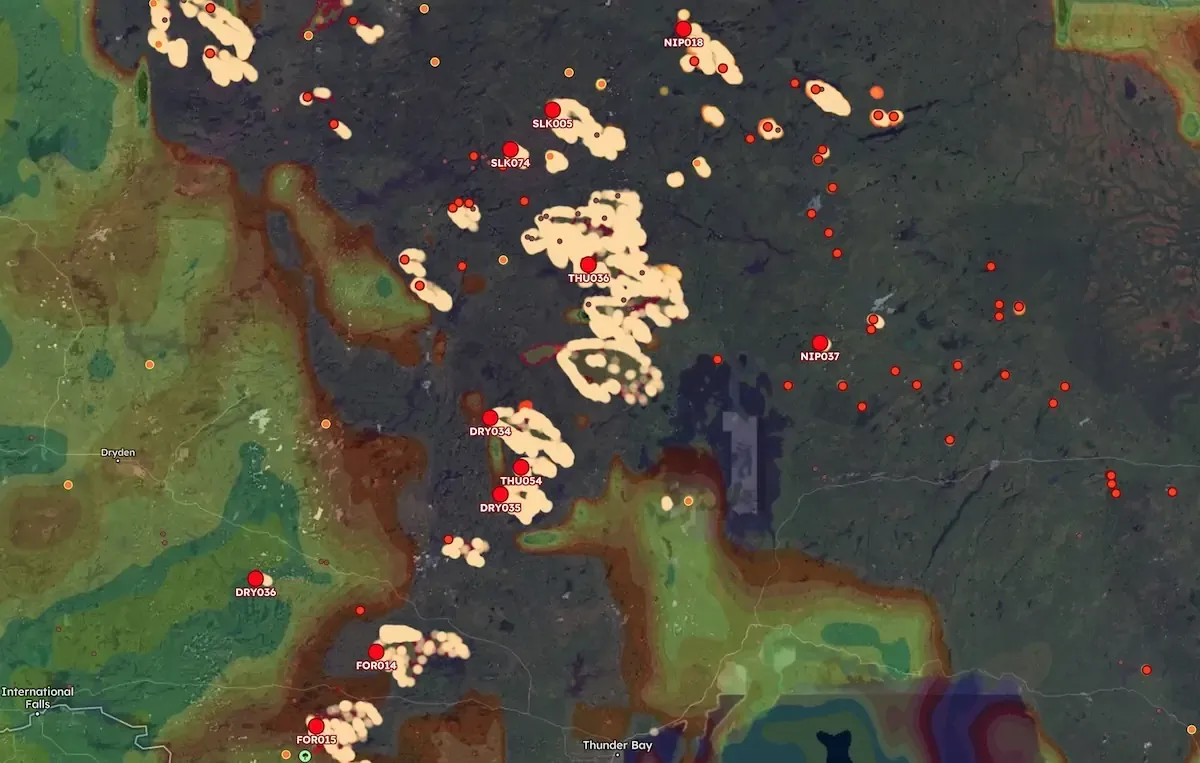
It has already been a summer we won't soon forget, and unfortunately, it's for all the wrong reasons. If you have been tracking the news or looking at satellite imagery lately, you know the boreal forest has been taking a beating. July 2026 has officially gone down as one of the most challenging months in the history of Canadian fly-in fishing. For those of us who live for the sound of a radial engine and the sight of a pristine shoreline, seeing those plumes of smoke on the horizon is gut-wrenching.
Wildfire is a natural part of the northern ecosystem, but that doesn't make it any easier when your favorite outpost cabin or a multi-generational lodge is in the line of fire. This month, we have seen a perfect storm of high heat, low humidity, and lightning strikes that have kept fire crews scrambling through the heart of Sunset Country. It has changed the landscape for many, it has certainly changed the plans for thousands of anglers who were ready to wet a line, but the greatest impact has been to the livelihood of the outfitters and lodge owners who make world-class fishing surrounded by pristine beauty accessible for all of us.
The Impact on the North: July 2026
What does this mean for the industry? It means more than just a few cancelled flights. For outfiters, it is a logistical nightmare. When a fire gets within a certain radius of a camp, the Ministry of Natural Resources (MNR) issues evacuation orders. That means outfitters are flying empty planes into fire zones to pull guests out, often with only a few hours' notice. It is stressful, it is expensive, and it is heartbreaking to leave a cabin behind not knowing if it will be there when the smoke clears.
For anglers, the current situation brings a mix of disappointment and perspective. You spend all year counting down the days, gear staged and spread out across the floor, only to get the call that your lake is "in the red." While the loss of a trip stings, most guys realize that a fishing trip can be rescheduled, but a forest takes decades to recover. We have seen incredible resilience from the fishing community this month, with groups pivoting to different lakes or pushing their dates back to help outfitters manage the chaos.
Outfitters and Regions Facing the Brunt
While the situation is fluid and changes with every shift of the wind, several key areas have been hit particularly hard this week. In Northwestern Ontario, the line from Atikokan to Armstrong and on to the north has been hit particularly hard.
Atikokan: Several lodges and camps in the Lac des Mille Lacs region were burned this week as fires quickly engulfed the northern and western shores. There were several significant fires in the southern portion of Quetico Provincial Park, and a large fire ravaged the area south of Pickerel Lke.
Armstrong: Multiple independent fires rapidly developed and merged into one superfire spanning 65 miles north-to-south and consuming 900,000 acres and counting. Several lodges and outposts camps were burned, including lodges and airbases for several fly-in outfitters that sit on the east shore of Mattice Lake along highway 527. Highway 527 is closed to all traffic north of Gull Bay.
Albany River: Farther north, numerous smaller fires continue to burn from Miminiska to Makokibatan along the Albany River system. This area is home to both fishing lodges and outpost camps which have been closed due to fire danger or smoke density that make flights impossible.
Resources for the Savvy Angler
Information is your best friend when fires are ongoing or at high risk. You don't want to rely on rumors from a Facebook group. You need real-time data to understand the risk and the current extent of the burns. Here are the tools I use to track fire activity and smoke patterns. I will add these to the resource section of this site because, as we witnessed this week, even if your lake is clear today, the wind can change everything by tomorrow morning.
- FireMap.live: Track all the fires and smoke plumes on one of the best maps I've seen. This resource highlights burn perimeters and active hot spots so you can keep track of what has burned so far and where the current dangers are located.
- FireSmoke Canada: Detailed smoke forecast. Even if the fire is 100 miles away, the smoke can be thick enough to ground planes. Use this to see if you will be breathing clear air or campfire soot.
- Ontario Forest Fire Info: Selectable layers show active fires plus fire danger level and current fire restrictions
- NASA FIRMS (Fire Information for Resource Management System): This satellite tool shows thermal hotspots in near real-time. This is the way to see active fires and new starts.
- The Outfitter's Satellite Phone: This isn't a website, but it is the most reliable resource. Your outfitter is in constant contact with fire crews. If they tell you it is time to go or time to stay home, trust them. They want you on the water just as much as you want to be there.
Looking Ahead: The Burnt Forest Silver Lining
It is hard to see the beauty through the blackend trees and scorched ground, but there is a silver lining. Fire releases a massive amount of nutrients into the soil, which eventually wash into the lakes. This "nutrient spike" can lead to incredible booms in the food chain. More nutrients mean more baitfish, and more baitfish mean heavier, healthier walleye and pike. Wildfire scars are are also prime locations for wild blueberries in the years to come; there should be excellent crops starting two years from now. Furthermore, a burnt shoreline can be a goldmine for moose and other wildlife sightings in the years following a fire, as new, tender growth provides the perfect habitat.
The north country is tough. It has been burning and regrowing since the glaciers receded. While July 2026 has been a trial by fire for many of our beloved outfitters, the lakes are still there, the fish are still biting, and the spirit of the Canadian wilderness isn't going anywhere. If your trip was impacted, don't give up on the dream. Work with your outfitter, be patient with the pilots, and keep an eye on those maps.
If your trip has been canceled due to fire, check the Outfitters section in the header. Reach out to a few other outfitters and see what is available – they generally have last-minute openings and would be happy to help your group find a suitable adventure.
If your favorite outfitter has lost camps, be sure to support them when they rebuild and re-open. They will need our business, and those lakes will have had time to rest, creating an outstanding fishing oppotunity for the lucky anglers who can schedule an early trip into a brand new camp!
Search Blog
- What Fishing Pressure Looks Like on Road Access Lakes vs Fly-In Lakes August 01, 2026
- Picaridin vs DEET July 25, 2026
- Wildfire impact - maps and resources July 17, 2026
- Trophy Pike: How to Find and Land a Northern Over 40 Inches June 06, 2026
- The Best Bug-Protection Plan for Wilderness Fishing April 18, 2026
- Brook Trout in the Backcountry: Chasing Specks on Fly-In Waters January 03, 2026
- What Your Outfitter Wishes You Knew Before You Arrived December 13, 2025
- Shore Lunch: The Best Meal You Will Ever Eat November 29, 2025
- How to Catch 100 Walleye in a Day November 22, 2025
- How to Book a Return Trip Before You Leave Camp November 14, 2025
- Planning a Budget-friendly Fly-in Trip Without Cutting Corners November 08, 2025
- Floatplane 101: What It's Like to Fly Into the Bush for the First Time October 25, 2025
- How to Quickly Locate Fish on a Remote Lake October 11, 2025
- Lodge vs Outpost Trips - the big picture September 27, 2025
- 8 Steps to Plan a Canadian Fly-In Fishing Trip September 06, 2025